


The Thailand guide07 of 08
Living in Thailand as a British Expat.
Where Britons settle, what life costs, schools, hospitals, flights from London, the time difference and the practical details of a move from the UK.
- UK visitor arrivals to Thailand, 2025
- Passed 1m on 17 December 2025
- Source: Tourism Authority of Thailand · as at October 2026
- Time difference with the UK
- GMT+7: 7 hours ahead in winter, 6 hours in BST
- Source: Thailand standard time (no daylight saving) · as at October 2026
- Retirement visa income test (O-A)
- £1,460 (฿65,000) a month
- Source: Royal Thai Embassy, London · as at October 2026
- UK visa-exempt stay
- Up to 30 days, tourism only, from 15 September 2026
- Source: GOV.UK foreign travel advice · as at October 2026
Thailand is one of the easiest countries in Asia for a Briton to live in. It has good private hospitals, British-curriculum schools, a large English-speaking expatriate community and, from 18 October 2026, a non-stop Virgin Atlantic service from Heathrow to Phuket. The usual choices are Phuket, Hua Hin, Pattaya, Bangkok and Koh Samui. Each suits a different stage of life, and the choice of place decides what you should buy.
This guide covers the practical side of a move from the UK. Our visa and residency guide covers the right to stay, pensions and tax.
Where do British expats live in Thailand?
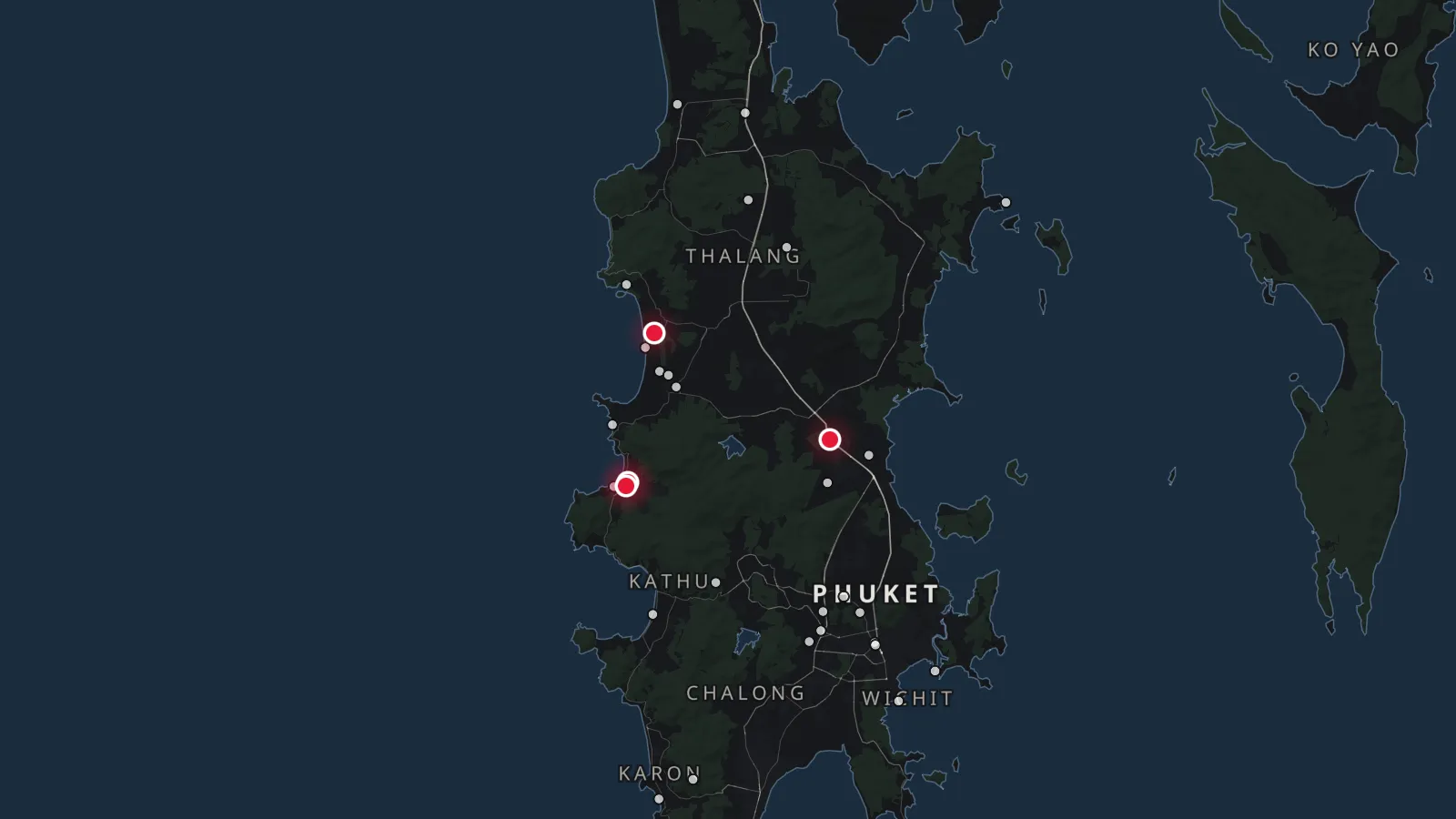
Phuket. Thailand's largest island and the market we work in. The west coast, from Bang Tao and Layan to Kamala, Surin, Kata and Rawai, combines beaches with international schools, a JCI-accredited hospital and an international airport. It suits families, younger retirees and owners who want rental income when they are away. Our living in Phuket guide goes area by area.
Hua Hin. A quieter seaside town on the Gulf of Thailand, a few hours' drive south of Bangkok. It has a long-established community of European retirees, golf courses and a slower pace. It suits retirees who want calm and easy access to Bangkok by road.
Pattaya. The closest beach city to Bangkok, with a large, mixed expatriate population. It has the widest choice of property at lower price points, and suburbs such as Jomtien and Pratumnak are much calmer than the centre.
Bangkok. A capital of world-city scale, with the country's best hospitals and international schools and a strong professional expatriate community. It suits working families and anyone who wants city life with beaches an hour's flight away.
Koh Samui. A smaller island in the Gulf with a villa-led market and a smaller airport. It suits owners who want privacy and are comfortable with fewer direct flights.
What does it cost to live in Thailand?
Day-to-day living costs in Thailand are well below the UK's. Numbeo's crowd-sourced comparison, updated in October 2026, puts consumer prices excluding rent in Phuket about 54% below London, and rents about 68% lower. Bangkok comes out about 51% and 74% lower. Treat these as a rough guide: they are built from user submissions, not official statistics.
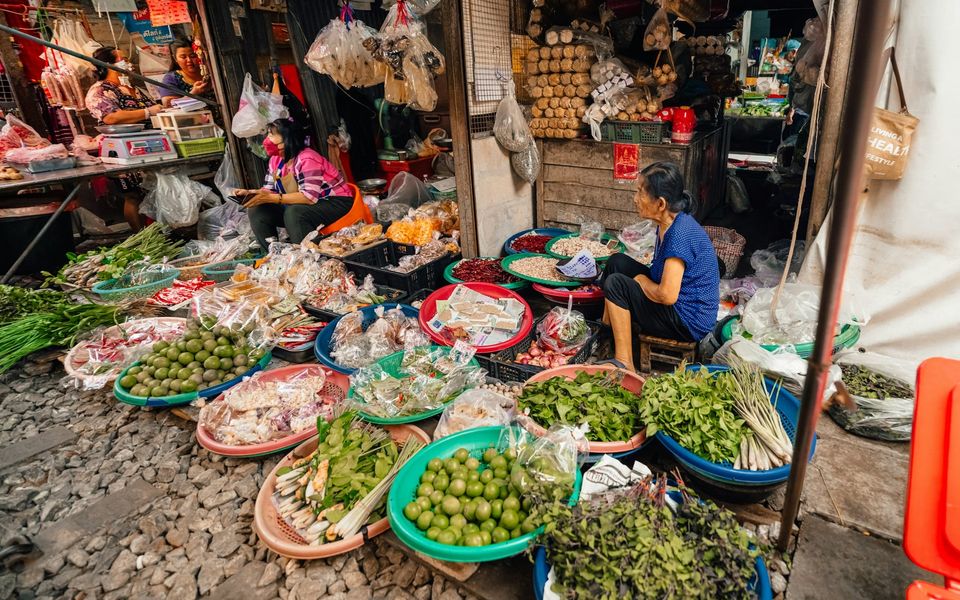
The gap is largest on local food, transport and domestic help. It closes, and can reverse, on anything imported or international:
- Cheaper than the UK: local restaurants and markets, taxis and ride-hailing, domestic staff, utilities other than air conditioning, and most services.
- Similar to or dearer than the UK: imported food and wine, cars (import duties are high), international school fees, and private health insurance as you get older.
- The variable that matters most: air conditioning. Electricity bills in a large villa in the hot season can be significant.
A useful official yardstick: the Thai embassy accepts an income of THB 65,000 (£1,460) a month as enough for a retirement visa. That is a minimum for a simple life, not a target. A couple living in a Phuket villa with a car, international health cover and regular trips home will spend a good deal more.
International schools in Thailand
British curricula are well represented in Thailand's international schools, though the choice outside Bangkok is narrower.
- Phuket: UWC Thailand in Thalang teaches the full International Baccalaureate programme. British International School Phuket (BISP), founded in 1996, takes ages 2 to 18, day and boarding, and follows the British Key Stages before the IB Diploma or BTEC. Both draw families from across the island, so school runs shape where families buy.
- Bangkok: the widest choice in the country. It includes Bangkok Patana School (British curriculum to IGCSE, then the IB), Harrow International School Bangkok (IGCSE and A Level) and Shrewsbury International School Bangkok (English National Curriculum to A Level), among many others.
- Pattaya and the eastern seaboard: Regents International School Pattaya, part of Nord Anglia, offers IGCSE and then A Levels or the IB, with boarding. Garden International School in Rayong follows the English National Curriculum and the IB Diploma.
- Hua Hin and Koh Samui: smaller sectors, with international-curriculum options. Check current year-group places before you commit to a move.
Fees are paid in baht, so a family budgeting in sterling carries currency risk on school fees as well as property.
Questions on this guide? Ask our Thailand team.
Ownership, costs and what is for sale, on WhatsApp or by phone.
Healthcare: hospitals and insurance
The leading private hospitals draw medical travellers from abroad, and the two that matter most to Phuket and Bangkok buyers hold JCI accreditation.
- Phuket: Bangkok Hospital Phuket has held JCI accreditation since 2009, with its current accreditation running from 2025 to 2028. It has English-speaking staff and international patient services.
- Bangkok: Bumrungrad International was the first hospital in Asia to gain JCI accreditation, in 2002, and is the best known of the capital's many private hospitals.
- Hua Hin: Bangkok Hospital Hua Hin has been JCI-accredited since 1 March 2024.
- Pattaya and Koh Samui: each is served by branches of the major private hospital groups, with Bangkok an hour or so away by air or road for complex treatment.
JCI accreditation is the international standard to look for. Check a hospital's current status on JCI's own register.
Insurance. NHS cover doesn't extend to Thailand, and private treatment is paid for. International health insurance is essential, and retirement visas require it. Buy it before you move, as premiums rise sharply with age and pre-existing conditions are often excluded.
What a well-provided year costs in Phuket
The home, the school, staff, dining, the club and the berth, priced line by line and set against the world’s wealthiest cities.
How do you fly from the UK to Thailand?
To Phuket: Virgin Atlantic flies non-stop from London Heathrow to Phuket three times a week from 18 October 2026, as a seasonal winter route on a Boeing 787-9. Flights leave Heathrow on Wednesdays, Fridays and Sundays at midday and land in Phuket early the next morning. For a buyer, that means an overnight flight, a day of viewings on arrival and no connection. Outside the season, and on other days, Phuket is reached via Bangkok or a Gulf or Asian hub.
To Bangkok: Thai Airways flies non-stop from Heathrow to Bangkok Suvarnabhumi. Its TG911 carried Thailand's one-millionth UK visitor of 2025 on 17 December 2025. British Airways flies non-stop to Bangkok from Gatwick, now year-round. Schedules change, so check the current timetable when you plan a trip. From Bangkok, domestic flights reach Phuket, Koh Samui and the other regional airports in about an hour.
Hua Hin and Pattaya are usually reached by road from Bangkok.
Keep this guide: get it as a PDF.
What is the time difference between the UK and Thailand?
Thailand runs on Indochina Time, GMT+7, all year, with no daylight saving.
- In UK winter (GMT): Thailand is 7 hours ahead. 9am in London is 4pm in Phuket.
- In UK summer (BST): Thailand is 6 hours ahead. 9am in London is 3pm in Phuket.
For anyone working remotely for a UK employer, the overlap is the Thai afternoon and early evening, which leaves Thai mornings free.
What is the climate like, and when are the seasons?
Thailand is tropical: warm all year, with the seasons defined by rain rather than temperature.
- High season, November to April: dry, sunny and calm on the Andaman coast, including Phuket. This is peak tourist season and peak rental season.
- Hot months: heat builds towards the end of the dry season, before the rains arrive.
- Rainy season: generally May to October, which brings rain and rougher seas to Phuket and the Andaman coast. Rain usually comes in heavy bursts, not all-day drizzle, and the island is green and quieter.
- Koh Samui and the Gulf follow a different pattern. The FCDO puts the rainy season on that side of the south-east coast at usually November to March. Owners who split their time between the two coasts can chase the dry season.
Should you rent or buy when you move to Thailand?
For most British families and retirees, the answer is to rent first and buy second, but not for long.
- Rent for a season in the area you think you want. Phuket's west coast, Hua Hin and Pattaya feel very different in the wet season from how they feel in January, and school runs, traffic and noise only show up when you live there.
- Buy once you know the area. A foreigner can own a condominium unit freehold within the 49% foreign quota. A villa is normally held on a registered lease of up to 30 years on the land, with the building owned. Our foreign ownership guide explains the structures.
- Think about letting it when you are away. Some owners spend the British summer in the UK and let their Phuket property in the months they are not using it. Whether that works depends on the building's licence and rules, covered in our rental yields guide.
- Budget in sterling. Purchase price, school fees and living costs are paid in baht, so a weaker pound raises the cost of the move, and a stronger one lowers it.
Driving, banking and daily practicalities
Driving. Thailand drives on the left, like the UK. A visitor needs the 1968 International Driving Permit alongside their UK licence. It costs £5.50 from PayPoint shops in the UK and can't be bought abroad. A resident can apply for a Thai licence using their UK licence, and the yellow house book makes this easier. Helmets are compulsory on motorbikes, and riding without the right licence invalidates most travel insurance. Road safety is a serious concern, and many families use drivers.
The law catches out new arrivals. Possessing or using vapes, e-cigarettes and heated-tobacco devices is illegal in Thailand. The FCDO says fines typically run from ฿5,000 to ฿30,000, offenders can be detained, and there is no exception for tourists. Overstaying a visa costs THB 500 a day, up to THB 20,000, and can lead to a re-entry ban. Criticism of the monarchy is a serious criminal offence.
Banking. A Thai bank account is essential for paying bills, receiving rent and meeting retirement-visa deposit rules. Requirements vary by bank and branch. Expect to show your passport, your visa and proof of address, and sometimes a letter from immigration or your embassy. Long-stay visas make opening an account much easier. Buying a property also requires funds to arrive from abroad in foreign currency, and the receiving bank issues a Foreign Exchange Transaction form for transfers above USD 50,000. Keep it: it matters when you sell.
Address registration. Owners can apply for a yellow house book (tabien baan) and a pink ID card for foreigners, which simplify banking, car registration and driving licences. Reporting duties, including the 90-day report and TM30, are covered in our visa guide.
Phone and internet. Mobile data is fast and inexpensive, and fibre broadband is widely available in Phuket, Bangkok and the other main expatriate areas. This is why remote work from Thailand is realistic.
Is Thailand a good place for a British family to live?
For most families who plan it well, yes. The infrastructure in Phuket and Bangkok supports family life at a high standard: schools, hospitals, flights and a large English-speaking community. The things to plan carefully are:
- The right to stay: a property doesn't give one
- Health insurance
- The tax position on income you bring in
- School places
The Thailand desk runs viewing trips from London that combine property with the practical side: schools, hospitals and the areas families actually live in. A 30-minute call is a good place to start, and we can send current price lists on WhatsApp for the developments we sell.
Frequently asked questions
Where do most British expats live in Thailand?
Mainly in Phuket, Hua Hin, Pattaya, Bangkok and Koh Samui. Phuket suits families and owners who want rental income, with international schools and a JCI-accredited hospital. Hua Hin has a long-established retired community. Pattaya has the widest choice at lower prices. Bangkok suits working families, and Koh Samui suits owners who want privacy and a villa.
How much money do you need to live in Thailand?
It depends on lifestyle. Crowd-sourced Numbeo data puts Phuket consumer prices, excluding rent, about 54% below London. The Thai embassy accepts THB 65,000 (£1,460) a month of income for a retirement visa, which is a minimum for a simple life. A couple in a Phuket villa with a car, international health insurance and trips home will spend considerably more. Imported goods, cars and school fees are not cheap.
What is the time difference between the UK and Thailand?
Thailand is on GMT+7 all year and does not use daylight saving. It is 7 hours ahead of the UK in winter and 6 hours ahead during British Summer Time. For someone working remotely for a UK employer, the overlap falls in the Thai afternoon and early evening.
Are there direct flights from the UK to Phuket?
Yes. Virgin Atlantic flies non-stop from London Heathrow to Phuket three times a week from 18 October 2026. It is a seasonal winter route on a Boeing 787-9. Otherwise, fly non-stop to Bangkok with Thai Airways from Heathrow or British Airways from Gatwick, then take a domestic connection of about an hour to Phuket.
Are there British schools in Phuket?
Yes. British International School Phuket (BISP), founded in 1996, follows the British Key Stages for ages 2 to 18, then the IB Diploma or BTEC, with boarding. UWC Thailand teaches the full International Baccalaureate. Bangkok has a much wider choice, including Bangkok Patana School, Harrow International School Bangkok and Shrewsbury International School Bangkok.
Is healthcare good in Thailand for expats?
Private healthcare is excellent in the main expatriate areas. Bangkok Hospital Phuket is JCI-accredited, and Bangkok has a deep bench of JCI-accredited hospitals, including Bumrungrad International. Treatment is paid for, and NHS cover does not apply, so international health insurance is essential. Retirement visas require it, and it is best bought before premiums rise with age.
Can I drive in Thailand on a UK licence?
As a visitor, you need the 1968 International Driving Permit alongside your UK licence. It costs £5.50 from PayPoint shops in the UK and cannot be bought abroad. Thailand drives on the left. Residents should convert to a Thai licence, which a yellow house book makes easier. Riding a motorbike without the right licence usually invalidates travel insurance.
Part of our guide to investing in Thailand.