



















United KingdomArea guide
Property for sale in Liverpool
A lower entry ticket than Manchester, a deep student and graduate market, and a waterfront still being rebuilt. Where to buy in Liverpool, what it yields and the due diligence the city demands.
Liverpool at a glance.
Entry prices sit well below Manchester: Liverpool averages £189,036 against £252,000, so the same budget buys more units or a larger home.
Gross yields of around 5.8% are solid but not higher than Manchester's 6.5% on current figures. Buy for the entry ticket and the right pocket, not for a headline number.
The city has a record of failed off-plan schemes sold to overseas buyers. Developer due diligence is not optional here.
Buying in United Kingdom.
The United Kingdom guide set, in the order a buyer needs it.
United Kingdom market hub- Buying guideStart hereEvery step from shortlist to first tenant, the protections that apply to off-plan purchases, and a realistic timeline for buyers based abroad.
- Foreign ownershipYes, with no nationality restrictions. How freehold and leasehold work, which ownership structure fits, and what you need to buy from abroad.
- Costs and taxesStamp duty with both surcharges worked out at four price points, every purchase and running cost, and how rent, gains and estates are taxed.
- Mortgages and financeDeposits, stress tests, foreign-currency income, company borrowing and how to time finance on an off-plan purchase, explained for buyers based abroad.
- Rental yieldsGross yields for eleven UK cities on the same ONS basis, how to turn a gross figure into a net return, and where the numbers hold up.
- Visa and residencyVisa & Residency in the UK
- LifestyleWhich city suits the way you want to live, what a year of living costs beyond the mortgage, how schools and the NHS work for newcomers, and the travel times that shape where people settle.
- Property market outlookWhat Savills and JLL forecast for prices and rents to 2030, why rental supply is tightening in Manchester and the Big Six cities, and what could change the picture.








The full Liverpool guide.
A lower entry ticket than Manchester, a deep student and graduate market, and a waterfront still being rebuilt. Where to buy in Liverpool, what it yields and the due diligence the city demands.
Liverpool is the second city of the North West, about 30 miles west of Manchester at the mouth of the Mersey. It has three universities, a large teaching hospital campus, a working port and a waterfront that has been under continuous regeneration for two decades. Its main draw for an overseas investor is a lower entry price than Manchester. It also carries a history that every buyer should understand before reserving a unit.
Low entry prices, and what they buy
The case starts with price. The average Liverpool home costs £189,036, with a gross yield of 5.8% (Landlord Resource via Property Investor Today, October 2026). Manchester's average is £252,000 (ONS, July 2026), and our calculation from the ONS price and rent figures puts the Manchester gross yield at about 6.5%.
Read those numbers carefully. Liverpool is cheaper to enter, but on current figures it does not out-yield Manchester. The investment case is the lower ticket, the depth of tenant demand in specific districts, and the regional backdrop: Savills (June 2026) forecasts North West mainstream prices to rise 25.0% over the five years to 2030, ahead of its 18.5% forecast for the UK.
Three demand drivers underpin the rental market:
- Students and graduates. The University of Liverpool, Liverpool John Moores University and Liverpool Hope University bring a large student population and a steady stream of graduates looking for their first city-centre flat.
- Health and science. The Knowledge Quarter clusters the University of Liverpool, the Royal Liverpool University Hospital and research institutions on the eastern edge of the centre.
- Visitors and culture. The waterfront, the two major football clubs and the city's events calendar support a strong short-stay and hospitality economy, which in turn employs young renters.
The Baltic Triangle, the waterfront and the centre
Area | Who rents | What to buy |
|---|---|---|
City centre and Liverpool ONE | Young professionals, hospital and university staff | One- and two-bedroom apartments close to Lime Street and the main shopping district |
Baltic Triangle | Creative and digital workers, graduates | New-build one-beds and studios near the converted warehouses; check the block's sales history |
Knowledge Quarter | Clinicians, researchers, postgraduates | Two-bed apartments that suit sharers and medical staff on rotation |
Ten Streets and the northern docks | Early-career professionals buying into a district still forming | Off-plan at launch pricing, priced for completion risk |
Liverpool Waters | Professionals who want the waterfront | Apartments in completed phases first; later phases only with strong developer checks |
A younger, price-sensitive tenant
The Liverpool tenant is younger and more price-sensitive than the Manchester tenant. Graduates who stay on after university, NHS staff, and workers in the city's hospitality and creative sectors make up most of the city-centre market. Students are a separate market, served largely by purpose-built student blocks.
The letting rules of thumb:
- Price the rent to the local market, not to Manchester. The tenant pool is deep but less able to absorb premium rents.
- One-bedroom and two-bed, two-bath apartments are the core product. Two-bed layouts suit sharers and hospital staff.
- Location within the centre matters more than finish. A unit a short walk from Lime Street, the hospital campus or the business district lets faster than a better-specified unit on the fringe.
Three kinds of stock, three risk profiles
Stock in Liverpool falls into three groups, each with a different risk profile:
Type | Typical buyer | What to watch |
|---|---|---|
Completed city-centre apartments | Landlords wanting income from day one | Service charge history, building safety paperwork, current rent roll |
Off-plan residential | Investors buying early in a regenerating district | Developer track record, how deposits are held, realistic completion date |
Student pods and hotel rooms | Sold to overseas buyers on guaranteed returns | Weak resale market and limited mortgage options; we advise caution |
Overseas buyers pay the higher rates of stamp duty: 5% for an additional dwelling plus the 2% non-resident surcharge, stacking to 7% on top of the standard rates (GOV.UK). At Liverpool price levels much of a typical purchase falls in the 0% and 2% standard bands, which keeps the total tax bill lower than on a comparable Manchester purchase.
Ten Streets, the Knowledge Quarter and the river
Liverpool's regeneration runs along the river and out from the centre.
- Liverpool Waters and Ten Streets. The northern docks are the city's largest regeneration area. Everton's new stadium at Bramley-Moore Dock opened in 2025, and the Ten Streets district behind it is being shaped by Liverpool City Council as a creative and residential quarter.
- Baltic Triangle. The former warehouse district south of Liverpool ONE became the city's creative and digital cluster, with new apartment blocks following.
- The Knowledge Quarter. Around the universities and the new Royal Liverpool University Hospital, the city is growing a health, science and research district that draws well-paid staff to live centrally.
- Northern Powerhouse Rail. The government confirmed Northern Powerhouse Rail on 14 January 2026 with a £45bn cap and construction in the 2030s. The Liverpool–Manchester link via Manchester Airport is a later phase. It is a long-term positive, not a reason to buy today.
The failed schemes, and how to avoid the next one
- Failed investor schemes. Over the past decade a number of Liverpool off-plan, student and hotel-room schemes sold to overseas buyers failed before completion, and investors lost deposits. The Insolvency Service has disqualified directors of Liverpool development companies that took money from overseas buyers. Ask who holds your deposit, on what terms, and what happens if the developer fails.
- Oversupply in parts of the market. Some student and investor-marketed blocks were built faster than demand grew. Check achieved rents and resale prices in the specific building, not the brochure.
- Guaranteed returns. A rental guarantee is only as strong as the company giving it. Treat guaranteed yields as a marketing cost built into the price.
- Resale liquidity. Lower prices also mean a thinner pool of owner-occupier buyers for some stock. Buy what a local buyer or mortgage lender will want at exit.
Liverpool or Manchester?
Manchester is the deeper, more liquid market: higher prices, higher rents, a larger professional employment base and, on current figures, a higher gross yield. Liverpool is the lower-ticket alternative, best suited to investors who want a smaller first UK purchase or who already hold in Manchester and want a second North West position. The two cities are close enough to share a regional economy, and Northern Powerhouse Rail would bring them closer in time. For most investors we recommend Manchester as the core holding and Liverpool as a selective addition. Read the Manchester guide for the comparison.
Read Manchester rental yields to compare the two cities, or the stamp duty an overseas buyer pays.
Elsewhere in our core markets.
Other cities where Continental sells new-build and off-plan property.





Explore
United Kingdom, by area and by home.
On the map
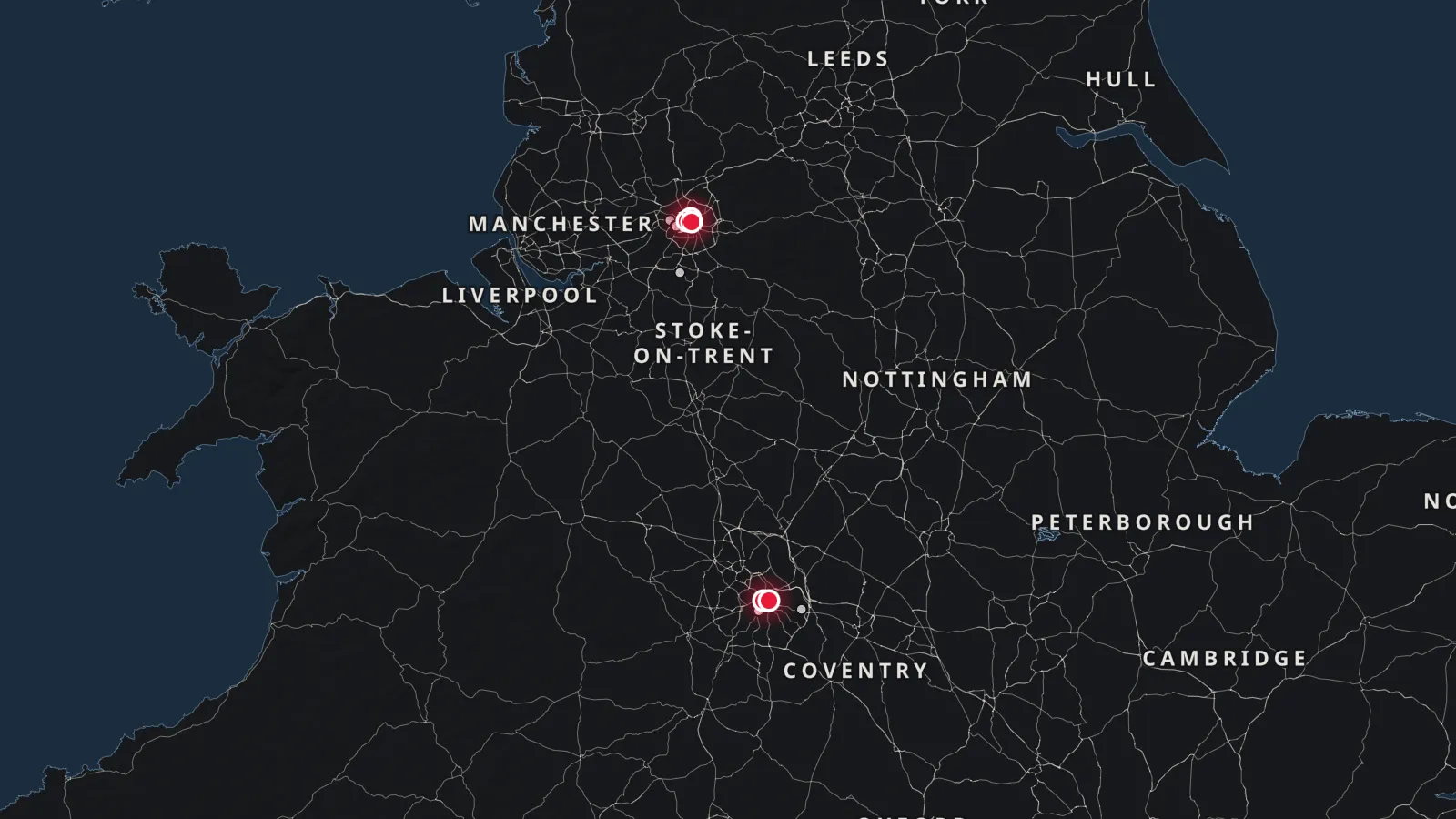
5 developments, 18 transport links, 4 schools, 3 hospitals and clinics, 12 beaches, courses and districts and 13 projects coming.
Open the United Kingdom map
United Kingdom · Liverpool
Talk to an expert about Liverpool.
Get one-to-one guidance on your next property purchase.